
(EN)
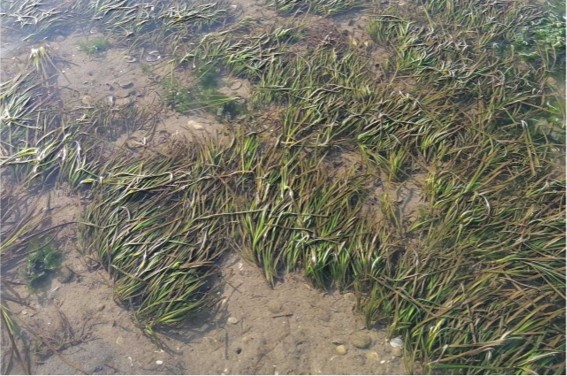
Although it was historically one of the species harvested together with moliço — carried in boatloads from the Ria and used to fertilize soils — Zostera marina is today a threatened seagrass.
For this reason, researchers at the University of Aveiro (UA) are proposing its repopulation. They believe that, among other benefits, seagrass may help prevent dredging and its negative impacts on the Ria’s ecosystems.
A meeting with members of the consortium — which includes Portuguese, Spanish, and German research centers, companies, and non-governmental organizations (NGOs) — marks the launch of the LIFE SeagrassRIAwild project.
The meeting is taking place today, October 18, and tomorrow, in the Academic Hall at the UA Rectorate building.
Pedro Coelho, researcher at the Centre for Environmental and Marine Studies (CESAM), explains that the small patches of Zostera marina recently found in one of the lagoon’s branches are not sufficient for system-wide repopulation. The project’s goal is therefore to use former salt pans owned by UA, next to the PCI Creative Science Park, as cultivation areas based on material imported from other systems, and from there to restore the Ria’s channels.
(PT)
Apesar de ser historicamente uma das espécies colhidas com o moliço, às carradas transportadas em barcos da Ria e usada para adubar os solos, a Zostera marina é hoje uma erva marinha ameaçada.
Por isso, investigadores da Universidade de Aveiro (UA) propõem o repovoamento. Acreditam que, entre outras vantagens, a erva marinha poderá prevenir dragagens e respetivas consequências negativas nos ambientes da Ria.
A reunião com os vários membros do consórcio que envolve centros de investigação portugueses, espanhóis e alemães, empresas e organizações não governamentais (ONG), marca o início do projeto LIFE SeagrassRIAwild.
A reunião decorre hoje, 18 de outubro, e amanhã, na Sala de Atos Académicos no edifício da Reitoria.
Pedro Coelho, investigador do Centro de Estudos do Ambiente e do Mar (CESAM), explica que as pequenas manchas de Zostera marina descobertas recentemente num dos braços da Ria não permitem o repovoamento do sistema. O objetivo do projeto passa então por usar antigas marinhas que são propriedade da UA, junto ao PCI Creative Science Park, para espaço de cultivo com base em importação de outros sistemas e, a partir daí, repovoar os canais da Ria.


